Let’s face it—when trying to conceive isn’t going as planned, it’s frustrating. And while female fertility often gets the spotlight, male infertility accounts for nearly half of all cases. One of the top culprits? A condition called varicocele.
So what’s the real deal between varicocele and low sperm count? Is it a proven cause or just a maybe? And more importantly—can fixing it actually improve your chances of becoming a dad?
Let’s dig into the science, the studies, and what you need to know.
First: What Is a Varicocele Again?
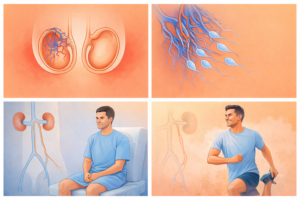
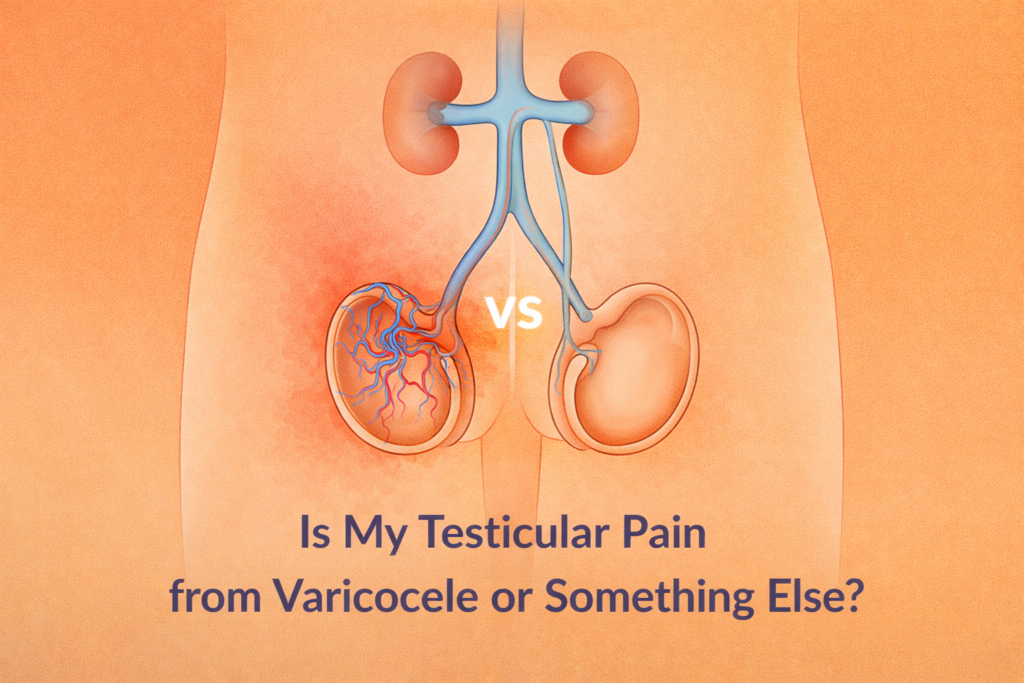
A varicocele is basically an enlargement of the veins within the scrotum—kind of like varicose veins in your legs, but in your testicles. This venous backup can raise local temperatures and disrupt the delicate balance needed for healthy sperm production.
Varicoceles are common:
- Affect about 15% of all men
- Present in up to 40% of men with infertility
- Usually found on the left side (due to vein anatomy)
How Varicocele Affects Sperm Quality
Now here’s where it gets serious. Healthy sperm needs:
- Optimal temperature
- Good blood flow
- Stable oxygen levels
But varicocele throws all of that off. The poor drainage leads to increased scrotal temperature, oxidative stress, and reduced testosterone production. Over time, this can mess with your sperm count, shape, and movement.
Key Research Studies That Prove the Link
Let’s break down what science actually says.
1. WHO Study on Infertile Men
In a large study published by the World Health Organization (WHO), varicocele was found in 25% of men with abnormal semen analysis and only 12% of men with normal sperm parameters.
Takeaway: Varicocele is much more common in men with low sperm count.
2. Meta-Analysis (Marmar et al., 2007)
A review of over 30 studies found that varicocelectomy (surgical treatment of varicocele) improved sperm concentration and motility significantly.
Improvement after treatment:
- Sperm count: ↑ by 9–12 million/mL
- Motility: ↑ by 10–15%
3. Randomized Controlled Trials
In a 2012 RCT published in Fertility & Sterility, patients who underwent embolization for varicocele showed notable increases in sperm count and morphology, compared to untreated controls.
4. Post-Treatment Fertility Rates
A study in Human Reproduction showed that 43% of couples conceived naturally after varicocele treatment, compared to 16% without intervention.
Diagnosis: Do You Actually Have a Varicocele?
You might not feel it at all—but a varicocele can still be causing damage.
Signs include:
- Dull aching pain in the testicle (usually left side)
- A feeling of “heaviness” or dragging
- Visible or palpable enlarged veins (feels like a “bag of worms”)
- Testicle appears smaller on one side
A scrotal ultrasound is the gold standard for diagnosis. It detects even small, subclinical varicoceles.
Treatment Options That Improve Sperm Count
1. Varicocele Embolization (Minimally Invasive)
- Outpatient, no stitches
- Uses imaging to block faulty veins
- Lower risk and faster recovery than surgery
- Studies show comparable results to surgery in sperm improvement
2. Varicocelectomy (Surgical Repair)
- Microsurgical technique
- More invasive, longer recovery
- Can improve hormone levels and sperm quality
Who Should Consider Treatment?
Treatment is often recommended if:
- You have abnormal semen analysis
- Your partner is also being evaluated for fertility
- You’re experiencing pain or discomfort
- There’s testicular atrophy (shrinkage)
If you’re not actively trying to conceive but your sperm count is low, treatment can still help preserve fertility for the future.
But Wait… Can You Still Get Pregnant with Varicocele?
Yes, but the odds are lower—especially if your sperm count is below 15 million/mL or motility is under 40%. Improving your sperm health with varicocele treatment significantly raises the chances of natural conception or successful IVF/ICSI.
Quick Recap: What the Research Says
- Varicocele is a proven cause of low sperm count
- Treating it improves semen parameters across studies
- Embolization and surgery both have high success rates
- Early diagnosis = better chances of preserving fertility
FAQs
Not always “normal,” but most men see a significant improvement in sperm count and quality within 3–6 months post-treatment.
Final Word: Don’t Ignore the Numbers
If your sperm count is low, and you’ve been diagnosed with a varicocele, it’s not just a coincidence. The science is clear—treating varicocele often leads to real, measurable improvement in sperm health and fertility potential.
And the best part? It’s treatable—without major surgery in many cases.
Talk to a fertility-focused urologist or interventional radiologist to explore your options today.